Resection of a head and neck tumor can remove structures that are essential to speech, swallowing, breathing and facial appearance. Microvascular reconstruction, also called free tissue transfer or free flap surgery, replaces them with tissue taken from another part of the body together with its artery and vein, which are sutured to vessels in the neck under the operating microscope. The reconstruction is carried out during the same operation as the resection.
Radial forearm free flap
Thin, pliable skin from the forearm, well suited to the tongue, the floor of mouth, the soft palate and the pharynx.
Anterolateral thigh free flap
Skin and fascia from the thigh, with muscle when bulk is required. It serves extensive defects of the tongue, the pharynx and the skin of the face and neck, and leaves little deficit at the donor site.
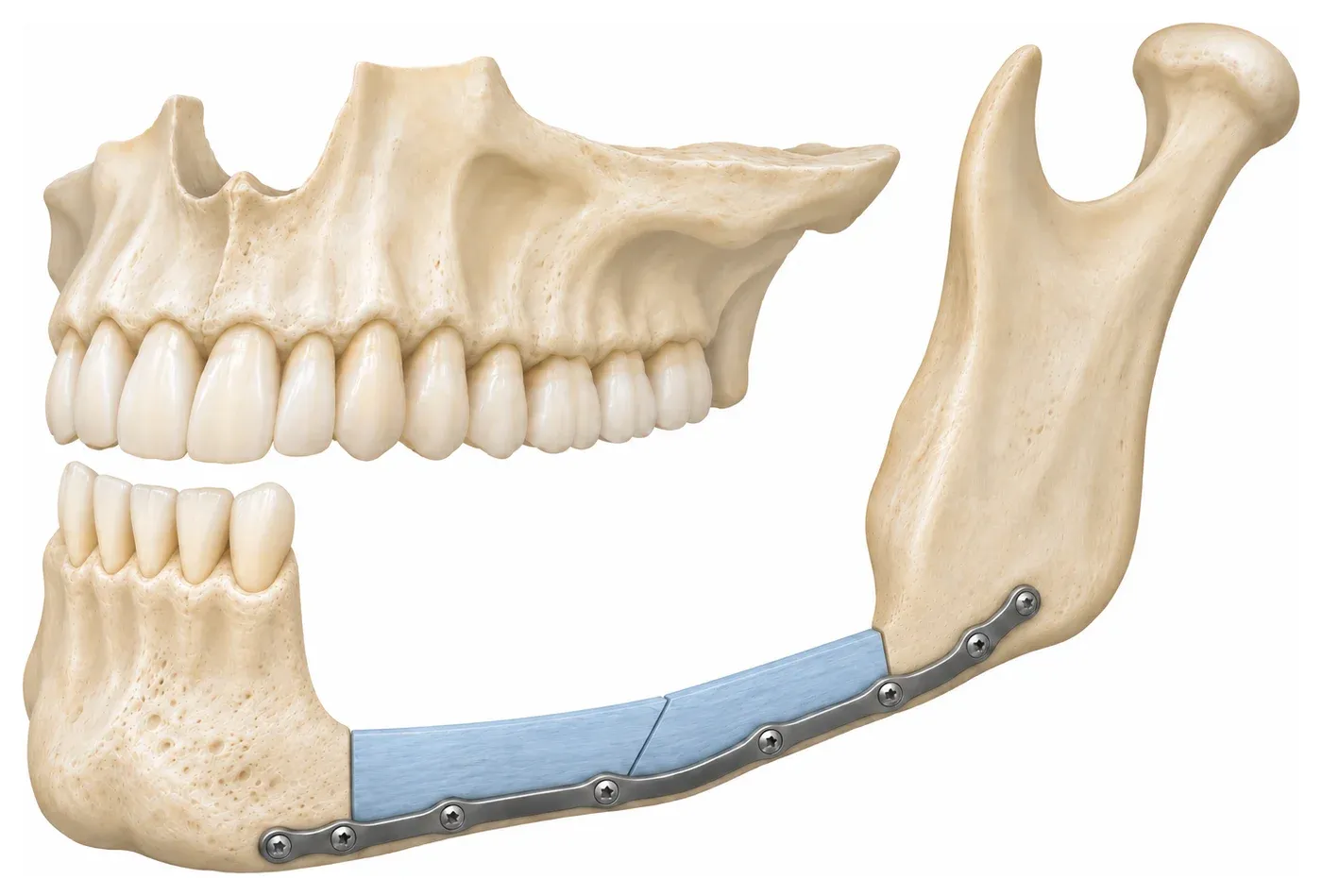
Fibula free flap
Bone from the lower leg, used to reconstruct the mandible or the maxilla. The bone is shaped to the defect, increasingly with virtual surgical planning and printed cutting guides, and can later receive dental implants.
Regional flaps
When free tissue transfer is not appropriate, tissue can be transferred on its own blood supply from a neighboring region. The supraclavicular artery flap, the pectoralis major flap and the temporalis flap are examples.
Reconstruction after radiation
Reconstruction in a neck that has been operated on or irradiated is more demanding, because recipient vessels are scarce and healing is impaired. Free tissue transfer remains feasible in most of these patients and brings healthy, well-vascularized tissue into the irradiated field.